Video
How CEOs Are Navigating the Enterprise Power Shift
Leading CEOs explore how business intelligence and AI are shifting enterprise power, reshaping decisions and creating durable competitive advantage.

Zeta Global Teams Up with Fireworks to Unveil New Specialized Athena Inference Models Using NVIDIA NemotronRead News
CEOs want to make better decisions that lead to faster results. One way to get there is to connect the information and expertise spread across their businesses, so teams can act on a fuller picture.
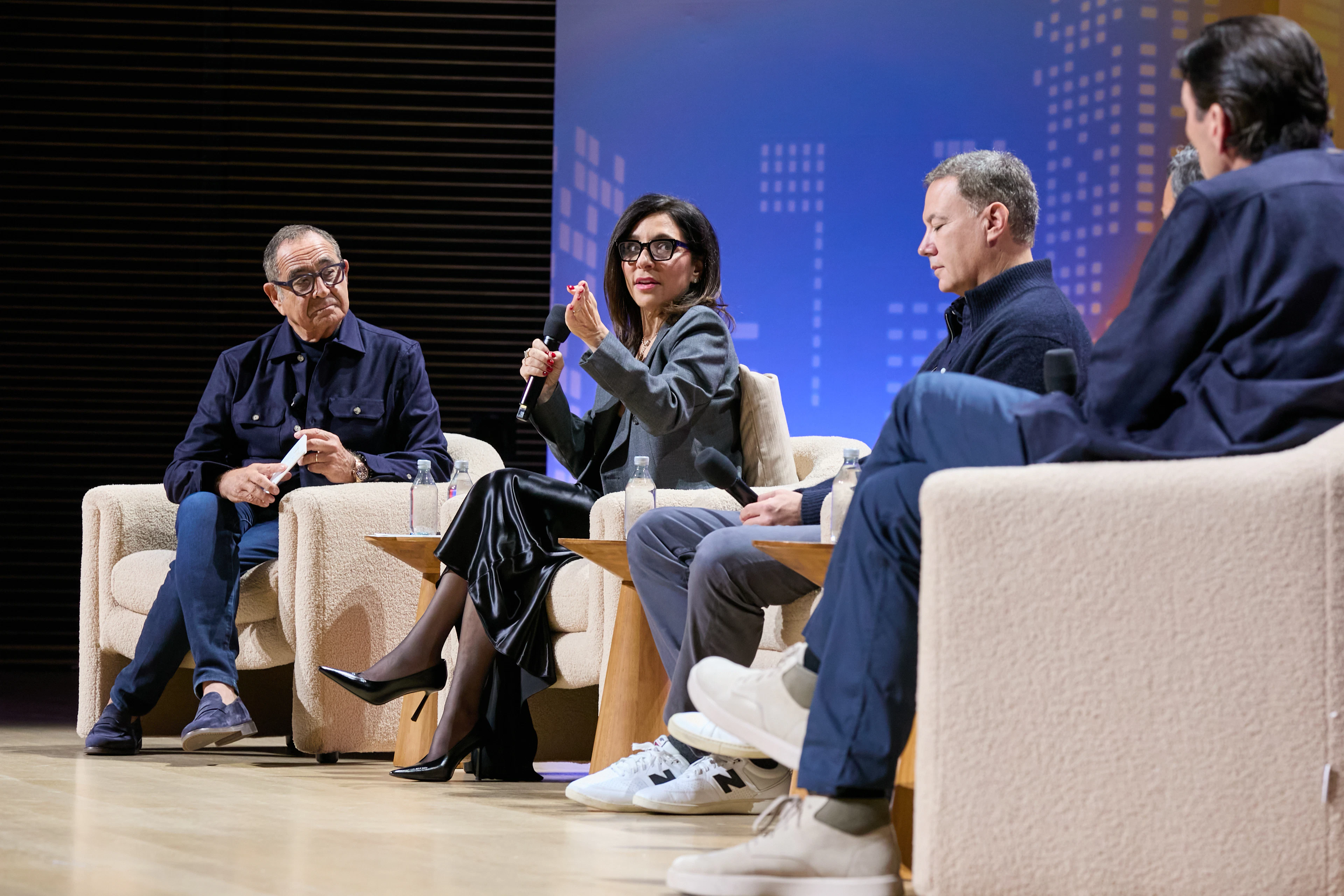
At Zeta Live 2026, current and former CEOs explored how AI can help companies put that knowledge to work. Their perspectives offer a practical look at the opportunities ahead, from making company knowledge available where decisions happen to bringing people and AI agents together.
“One of the biggest problems in any large organization, or even a mid-sized organization, is that context gets lost from place to place to place,” said Henry Schuck, Founder and CEO of ZoomInfo.
He sees agents helping information move through the company. Onstage, he also described why personal AI adoption was insufficient to change his sales organization: teams needed to be reorganized, with the technical skills and support to arrive better prepared for customers.
For Alex Karp, Co-Founder and CEO of Palantir, the starting point is understanding the distinctive knowledge behind a company’s value, from how it makes a product to how it brings that product to market.
With AI, “you augment what’s particular about your business,” he said. His challenge to CEOs was to gain a detailed view of that advantage and strengthen it while protecting the knowledge that competitors should not have.
John Sculley, former CEO of Apple and Pepsi-Cola, described a shift from the annual plan toward “the plan of the moment.”
He explored how customer intent could enrich the operating information CEOs already use, including revenue, margins, pricing, and supply chains. Connecting those perspectives gives leadership more to consider when planning growth: what the business can deliver alongside what customers may want next.
At eMed, CEO Linda Yaccarino described teams populated by both people and agents, with an opportunity to invent how they work together.
“But you have to give your teams the courage to do it,” she said. The CEO must also “provide that safety net.” Encouraging experimentation comes with a responsibility to bring human experience and judgment to the decisions that follow.
AI can accelerate testing and execution. For Yahoo CEO Jim Lanzone, that makes the consequences of a decision an essential consideration.
He described a responsibility to slow decision-making down, “especially where things are not reversible.” Reversible choices can move quickly; consequential commitments deserve greater scrutiny. The ability to act faster makes the CEO’s judgment about pace more valuable.
Tim Armstrong, CEO of Flowcode, urged teams to understand a customer’s operations deeply enough to deliver “an operational outcome.”
He sees advertising evolving toward a form of operating service. That asks more of the people doing the work: understanding how a client’s business runs and what needs to change. For leaders, it places the value of marketing in the business result it helps produce.
“Having everybody aligned is a surefire way to succeed,” said Michael Kassan, Founder and CEO of 3C Ventures, after emphasizing the need to decide which facts will inform a choice.
His onstage questions focused on which decisions CEOs keep close, which they push deeper into the organization, and where technology can act. Shared information becomes more useful when people also understand the decision they are making together.
These leaders put the CEO at the center of how intelligence travels through a business. The meaningful test is whether teams can use what the company knows to make a better choice, with clarity about the outcome they are pursuing and the decisions that still require human judgment.
Watch How CEOs Are Navigating the Enterprise Power Shift, or explore all the conversations from Zeta Live 2026 on demand.
Leading CEOs explore how business intelligence and AI are shifting enterprise power, reshaping decisions and creating durable competitive advantage.

See the top takeaways on ambition, AI, and business growth and relive the best moments from Zeta Live 2026.

See how forward-deployed engineering turns enterprise knowledge into reusable AI capabilities that strengthen decisions and simplify implementation.
Zeta's unified, intelligent system transforms deeper customer understanding into confident action, faster execution, and measurable business outcomes.