
Case Studies
Tombras Uses Zeta AI to Turn Insights Into Action for Clients
Discover how Tombras leverages its partnership with Zeta to drive real-time insights and AI-powered agency operations.

Zeta Global Teams Up with Fireworks to Unveil New Specialized Athena Inference Models Using NVIDIA NemotronRead News
Agencies have long been valued for their ability to execute. Media buys, campaign builds, creative production, and audience segmentation were the services that justified retainer fees and kept client relationships intact for years.
But the agency value proposition is changing as AI makes execution faster and easier. A marketing director can now build an email campaign with a well-crafted prompt, and a brand strategist can generate creative variations in minutes that would have once taken an agency team days to produce.
The agencies that will thrive in this environment are the ones repositioning themselves as strategic intelligence partners rather than execution shops. And the difference between the two comes down to one thing: the quality of the data and tools they use to understand audiences.
Most agencies still rely on a patchwork of internal tools and third-party research platforms that were built for a different era. These systems tend to run on probabilistic data that’s outdated by the time it reaches a client pitch. Legacy platforms that many agencies lean on for audience intelligence offer a starting point, but the scale and freshness of their data is limited when clients are asking for specificity and speed.
In response, some agencies have started building their own internal AI tools or stitching together ChatGPT-powered workflows for audience development. However, many agencies are finding that homegrown solutions, built on top of general-purpose AI models, lack the structured, real-time data foundation that serious audience intelligence requires.
They can summarize and generate, but they can’t tell you what a specific consumer segment is actually doing right now, what signals they’re sending through their purchasing behavior, or how those behaviors change over time.
The core issue is that the data powering most of these tools is historical instead of real-time.
The deprecation of third-party cookies has forced a broader reckoning across the industry, and one of its more productive outcomes is that agencies and their clients are finally waking up to the value of their own data assets. For years, third-party data dominated the conversation around targeting and measurement. Now, brands are realizing that the most important and valuable data they have is the data they already own.
For agencies, the ability to help clients centralize fragmented data sources and extract meaningful intelligence from them is quickly becoming the most valuable service they can offer. This is where platforms built on deterministic, real-time data create a meaningful advantage.
Zeta’s Data Cloud, for example, is built on behavioral signals that are constantly updating, which means the intelligence agencies deliver to their clients reflects what is actually happening in the market rather than what was happening six months ago.
That distinction is important when a client is asking an agency to justify a media allocation or explain why a campaign should target one audience over another. The answer needs to be grounded in current behavior.
Read Next! The Walled Garden Imperative: Owning Your Audience, Data, and Destiny
One of the more outdated practices still common in the agency world is the traditional persona development process. For years, agencies would hire third-party research firms to conduct weeks or even months of surveys, focus groups, and secondary research to produce a set of buyer personas. Those personas would then be applied like a template across campaigns, often remaining unchanged for months.
That model doesn’t hold up anymore. Consumer behavior moves too quickly, and the idea that a static persona built on a six-week research engagement can accurately represent a living, breathing audience is increasingly difficult to defend.
The alternative is a model where audience profiles are built and updated continuously as new data flows into the system. This creates something closer to a flywheel, where performance data from campaigns feeds back into audience profiles, which then inform the next round of strategy, which generates new performance data, and so on.
Agencies working with platforms that support this kind of continuous feedback loop can build audience segments and run intelligence against them in hours rather than months, giving them the speed and flexibility that clients now expect as a baseline.
As AI continues to automate the execution layer of agency work, the real value is moving upstream. Building an email, launching a social campaign, even managing a programmatic media buy are becoming table stakes that technology can handle with increasing efficiency.
The harder and more valuable questions are the strategic ones.
These are questions that still require a human layer of judgment, especially when a brand is trying to balance competing objectives like building awareness while also driving conversion.
An agency that can walk into a room with real-time audience intelligence, a clear point of view on targeting strategy, and the tools to prove that their recommendations are grounded in actual behavioral data is an agency that will keep winning business.
Having the right intelligence platform behind them also allows agencies to move at the speed their clients now demand. The days of telling a client to wait three weeks for a research report are over. The agencies that can deliver strategic recommendations backed by current data, quickly and with confidence, are the ones that will continue to earn trust and justify their value.
As brands invest in building in-house AI capabilities and consultants move further into media strategy, agencies can no longer treat execution as a defensible revenue stream.
Intelligence, not labor, is becoming the primary source of value, and the agencies that haven’t internalized that yet are running out of time to make the transition on their own terms.
Agencies need to be asking themselves:
These questions have a specific answer now that they didn’t have a few years ago. ID-level, real-time intelligence combined with AI-driven audience development is available, and the agencies using it are already showing up to client conversations differently than the ones that aren’t. The unlock is the ability to build a fundamentally stronger case for why the agency belongs at the strategy table in the first place.
The agencies that invest in these capabilities now will define what the next era of this industry looks like. The ones still running on outdated tools and static processes will find themselves increasingly replaceable by the very technology that should have been making them stronger. The difference between those two outcomes comes down to what agencies decide to prioritize starting now.
Zeta Data & Identity
With unique identity graphs and exclusive signals, Zeta empowers brands to truly know, find, and engage real customers with more accuracy and impact.
Zeta AI
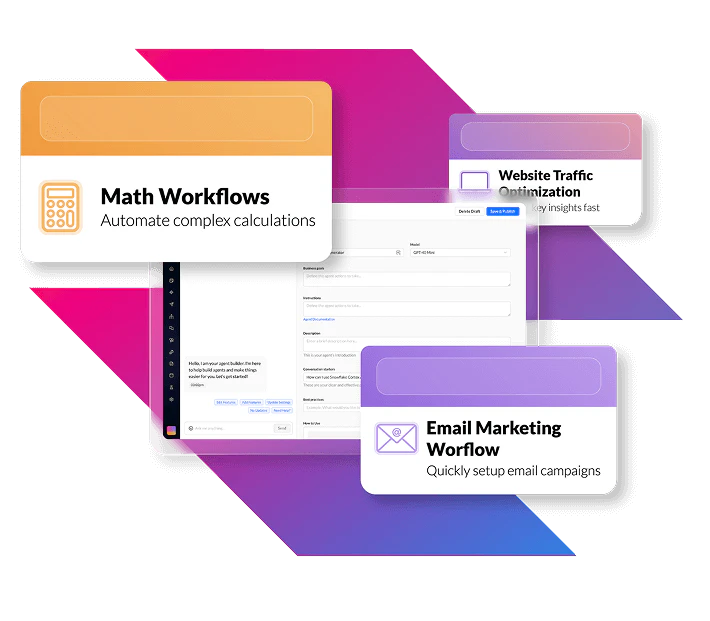
Where intelligence meets execution. Zeta is the only platform built with AI at the core and grounded with powerful consumer insights.
Discover how Tombras leverages its partnership with Zeta to drive real-time insights and AI-powered agency operations.

Research from EMARKETER and Zeta reveals 78% of marketing leaders expect to unify their tech stacks in the next three years, most citing AI as a key driver.

Discover how deterministic identity empowers marketers to reach real people, improve attribution, and respect privacy in a post-cookie world.
To implement these strategies effectively, brands need the right technology and tools to support their personalization efforts. The Zeta Marketing Platform empowers businesses to offer highly tailored experiences driven by AI.